In celebration of the UN International Day of Happiness 2021 (‘Happier/Kinder/Together’), I was thrilled to give a presentation at Open Age which was followed by animated discussion with around 30 members. The oldest attendee was a 92 year old member who attends a number of weekly exercise classes and is certainly ageing joyfully. How can one not be with Open Age to help us?
The event also launched the Art Competition ‘What does Ageing Joyfully Mean to You?’ which was inspired by my doing an Open Age ‘Art on the iPad’ course this term. Watch this space for the winner!
Living better and ageing joyfully during a pandemic – and afterwards.
Really looking forward to giving a talk on Wednesday 17th March, via Zoom, for the recently launched The Joy Club . It is open to all those in the UK from age 65. Helping us to age joyfully.
The ‘Here and now’ are important for a joyful life
I, and many far wiser than I could ever hope to be, believe we can live and age better by focusing on the present.
Why? I offer five reasons.
1. It’s the only reality!
Thich Nhat Hanh (born in 1926) is a Vietnamese Buddhist monk and peace activist.
2. It’s ‘the first day of the rest of your life’.
It’s a daily fresh beginning, giving you the chance to try again, to discover new things, friends, passions, take an initial step to achieving your dream, do better – or just enjoy life and be happy. Delighted that both Winnie the Pooh and the Dalai Lama agree.
Tenzin Gyatso, the 14th and current Dalai Lama since 1940.
I doubt you have seen His Holiness mentioned in the same sentence as ‘the bear of very little brain’ before!
3. It’s good for you
Maslow (1908-1970), an American psychologist, is best known for creating Maslow’s ‘Hierachy of Needs’
We cannot know the future. The past is history and we can, and should, learn from it. But, by living in the moment, and giving full attention to what you are doing now, you are less likely to worry about the future, ruminate on regrets, or feel guilty about past actions.
A wonderful cartoon by Karl Stevens in a recent The New Yorker magazine.
Being ‘mindful’ is good for wellbeing, for example, mindful walking (being aware of your body, your breathing, and what you can see and hear as you take each step), mindful eating (focusing on the taste, look and sensation of your food), meditating or doing a jigsaw.
So, find your ‘flow’ – the concept of psychologist Mihaly Csikszentmihalyi – to help you find happiness and productivity. In essence ‘flow’ is a state of complete absorption in an activity, especially creative ones, being challenged and becoming totally lost in the moment. I recommend dancing! For more on ‘flow’ see here.
4. You’ll notice and appreciate many wonderful small things
And, as we’ve discovered over the last year, focusing on what’s real and happening now can provide much happiness and comfort, from birdsong and a cloudless blue sky – to a piece of chocolate cake!
Paramahansa Yogananda (1893-1952) was an Indian monk, yogi and guru considered as the ‘Father of Yoga in the West’
5. And a good day today can help towards a better tomorrow
If you try to make today the best it can be for you, and hopefully those around you, then you’ll be helping to create a better future. One small step, one day at a time.
As Albert Einstein, the theoretical physicist who lived to 76, said
‘Life is a preparation for the future and the best preparation for the future is to live as if there were none’.
Two cautionary notes
Nevertheless, it’s wise to give some thought to your future, what you want to achieve and how. Living fully in the ‘here and now’ does not mean ceasing to dream of, and plan for, good tomorrows. And it’s no justification for hedonism or failing to consider the possible negative consequences of your behaviour. Living in the present is one key ingredient in a recipe of behaviours and actions for a happier, healthier life. ‘How to Age Joyfully’ (my book!) and/or other sources can tell you more.
Secondly, if each day is a real struggle, and your mental health is suffering, do reach out, perhaps to friends, family, helplines, charities, or, if necessary, professional services – whoever is best placed to help you.
So, finally…
May you live today, and all your ‘todays’, to the max and to the best of your ability. This day won’t return – unless you’re in the film ‘Groundhog Day’! And nothing in life, including tomorrow, is guaranteed. So relish and revel in each and every day you are given.
‘How to Age Joyfully’ has not only made it all the way to Singapore but it has also been selected as the best book on health, fitness and nutrition on the website ‘Top Best in Singapore’.
Extremely chuffed it’s appreciated both near and far. Thank you so much.
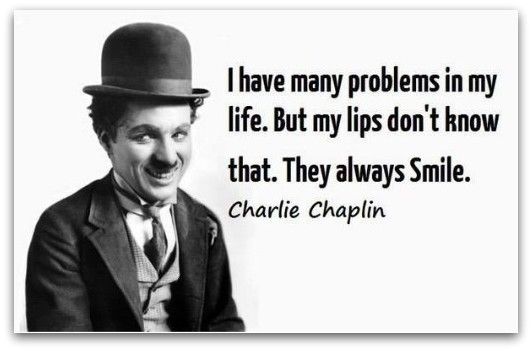
From ‘Smile’, lyrics by Geoffrey Parsons and John Turner
The music of this famous song was composed by Charlie Chaplin, and featured in his 1936 film Modern Times.
Lyrics were only added in 1954, and ‘Smile’ was originally recorded by Nat King Cole. The message is simple – to keep smiling even in the worst of times and ‘maybe tomorrow you’ll see the sun come shining through for you.’ It’s a wonderful song of hope and staying positive in difficult times which strikes a strong chord right now (excuse pun). We’re suffering so much sadness, anxiety and grief from this terrible Coronavirus, but vaccines are now giving us hope for the future.
Smiling is good for your health
Studies have shown that smiling improves your mood (your brain releasing endorphins and serotonin), reduces stress, boosts your immune system and reduces blood pressure. There is even evidence that smiling can increase longevity.
Research has also shown that forcing a smile has health and mood enhancing benefits, your brain being unable to differentiate between a fake and the genuine article! The quote from 94 year old Vietnamese Buddhist monk and peace activist, Thich Nhat Hanh, says it all.
And it benefits others too
Smiling can also affect others positively. When you smile at someone they often mirror the action and smile back. A connection is made and you both feel better.
As Mother Teresa said, much more eloquently:
Or, if Winnie the Pooh is more to your taste, then:
All Smiles are not equal
There are various types of smile (about 17 types have been identified, many having nothing to do with expressing happiness), and some cultures interpret a smile differently.
These are known as the Khmer Smile, Bayon Temple, located in Angkor, Cambodia
The ‘gold standard’ is called the Duchenne smile which is the genuine expression of positive emotion and difficult to fake. A Duchenne smile happens when the eyes are also involved. Or, being technical, when the zygomatic major muscle lifts the corners of your mouth at the same time as the orbicularis oculi muscles contract, (lifting the cheeks and forming wrinkles around the eyes).
But nowadays when we are – or should be! – wearing masks for much of the time, many of us (me included) really miss seeing people’s smiles. We need all the joyful interactions we can get, even at two metres distance.
A minor consolation is that it’s still possible to detect a true smile from the eyes – and face mask emojis have been created that demonstrate it!
(The original smiley face icon was created in 1963 by Harvey Ball. He received $45)!
So …
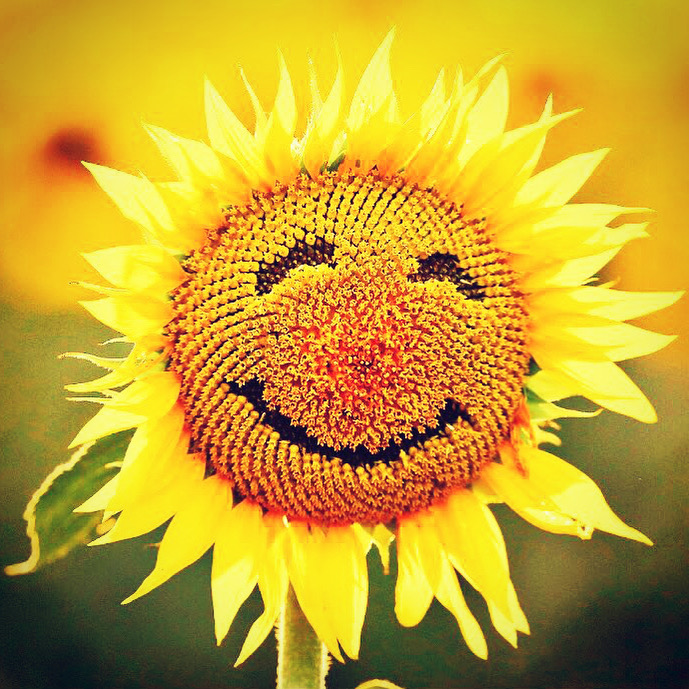
Maybe this blog has raised a smile and, if so, I’m delighted. But do try to find someone or something that makes you smile each and every day and not just on World Smile Day – 1st October 2021 is a long time to wait! 😊
Lovely surprise to see my book and blog get a mention in the Civil Service Retirement Fellowship’s Staying at Home Guide , the second of 2021. This excellent national charity’s newsletter also features other great charities including Independent Age.
Very many will share the view expressed below with which I can fully sympathise.
As a Londoner, life is particularly worrying right now. The Mayor has declared a ‘major incident’ in the UK capital with the Coronavirus now ‘out of control’; apparently one in 15 have the virus in some boroughs.
We’ve recently had the highest number of deaths in a day since the pandemic began. This is appalling news and my heart goes out to all those who have suffered from Covid, or have experienced a loved one do so.
I also cannot begin to imagine what it must be like for front line workers in hospitals and care homes, paramedics and all those who have been working so hard for so long saving lives and caring for the sick.
So, in my mission to try to spread a little joy even in dark times, is there anything positive to say or suggest, apart from the vaccine is coming to a place near you, sooner or later?
Well, may I offer a tip, which I appreciate is easier written than done. .
Be Grateful
Why?
Because there are huge rewards in finding things to be grateful for.
In ‘How To Age Joyfully: Eight Steps to a Happier, Fuller Life’, Step 6 is ‘Be Grateful’. Below is the page summarising the benefits of practising gratitude. The chapter then provides 12 tips that might help, especially right now.
How?
It may be a challenge, but there’s almost always something to be grateful for, from waking up each morning to eating your favourite chocolate or being able to dance in your kitchen to your most uplifting songs. (You can guess what does it for me)!
One of the tips in the book is not original, but it works. Start a Gratitude Journal and every day write down 3 -5 things you are grateful happened that day, however large or small. There are even several apps to help. Entries might include chatting to a friend, watching a funny TV programme or video, helping a neighbour, giving a smile and receiving one in return, and the ‘golden ticket’ – getting vaccinated. If you persevere for as little as two weeks, research has shown you can significantly boost your wellbeing.
Other tips include counting your blessings – write a list if that helps. I got the idea for this blog because I am doing exactly that, after pretty worrying health scares just before Christmas made me forget the pandemic completely. But thanks to our wonderful doctors, nurses and hospitals, I was able to crack open the champagne and celebrate on Christmas Day.
(If you read my last blog you will know we ate the full Christmas lunch but, due to the last minute restrictions, only with our son who is in our ‘support bubble’. And yes, it was freezing!)
Find Joy in Each Day
So please value all you have and what you can do, rather than what you lack. Despite the current limitations of lockdown3, with a little creativity most of us can find some joy in each day. I’m just so grateful to have the technology to connect with others, learn, laugh and so much more. Imagine going through this pandemic a few decades ago.
I confess, I’ve just had a go at painting for the first time since school. It’s an elephant from the social enterprise ElephantParade, a great gift for young and old(er) alike. My elephant is decorated with a bunch (a ‘drift’?) of pigs many involved in my favourite activities – dancing, eating, reading, writing… The pigs are extremely poor attempts at capturing the wonderful illustrations of Sandra Boynton(check out her website for an abundance of joyful animals).
With my surname, pigs are, perhaps unsurprisingly, a favourite animal of mine. Although far too old for Peppa Pig, I love Piglet, Miss Piggy, Wilbur, Hamm and the Empress of Blandings. Do you know them all? Pigcasso, a pig who paints – and incredibly not a fictional creation – could probably have done a better job than me, but we all have to start somewhere. Paints and brushes have now been bought…
Pigcasso🐷 – ‘the international art sensation’ with Jo Lefson in South Africa
So, Good Luck, Dear Readers!
Hopefully we’ll all be celebrating getting our jabs over the coming months and we’ll continue to express our deep gratitude to all those involved in creating, making and distributing these life saving vaccines.
Just think how lucky we are not to be living at the time of the seventeenth century Great Plague, or the Spanish Flu almost exactly a hundred years ago. Now that’s something to be grateful for!
Wonderful Oprah Winfrey – 67 years old this month and a role model to us all! @Oprah
Delighted to record a presentation, on ageing joyfully in these challenging times and how my book can help, for the excellent Move It or Lose It Club. Award winning Move It or Lose It was founded in 2010 by Julie Robinson. Take a look at what the Club offers and get free membership in January.
Just a few words as we approach the end of one of our most difficult years, both on a global and personal level. And I’ve survived a fair number of years – and difficulties.
But we have got through it and, with a vaccine on the horizon, there is hope. It’s now a question of hanging on in there through the predicted tough first months of 2021, after which life should return to some kind of normality. Fingers crossed.
Says it all! One of many free e-cards from iconic illustrator Sir Quentin Blake
I do hope that your year hasn’t been one of substantial personal or financial loss, poor physical or mental health, or other hardships but, if it has, I also hope you’ve had people, a faith or whatever you needed to support you. I know how much that can help in the worst of times.
Perhaps the wise words of Stephen Hawking (1942 – 2018), who knew a thing or two about survival and thriving in challenging circumstances, may also help:
‘However bad life may seem, there is always something you can do and succeed at. While there’s life there’s hope’
It’s not been all bad…
And there have been some good stand-out memories of 2020, particularly the dedication of front line workers and our heartfelt attempts to show our appreciation, the brilliance of scientists achieving what seemed impossible only months ago, the countless acts of kindness and selflessness, and many people discovering what truly matters to them, including family, friends, health and hugs.
And in 2021….
With our actions and behaviour, coupled with a little luck, we will outlive and control this pandemic and may even emerge a kinder and more compassionate society.
On a personal note…
My personal goals (as we should have some – Step 3: Purpose) are in fact almost identical to every other year! They are to try to:
1. Stay positive and optimistic (Step 8: Be Positive);
2. Return to physical activity as soon as I can ( Step 1: Move);
3. Reduce my consumption of unhealthy food; over-eating at Christmas is traditionally allowed (Step 2: Eat Right);
4. Continue to do my little bit to help others (Step 7: Give) through the charities I actively support (Open Age, Para DanceUK, Sage Dance Company), my book (How to Age Joyfully), this blog and in whatever other ways I can contribute. Happily there are a few opportunities in the pipeline. Lastly:
5. I want to continue with two new found hobbies – clay modelling and singing (of a kind!) (Step 5: Grow).
And when this pandemic is over, I plan to hug mightily, meet friends, party hard, dance and laugh, like never before (Step 4: Connect). So there’s much to look forward to!
Beautiful drawing from the wonderful Charlie Mackesy, author of ‘The Boy, the Mole, the Fox and the Horse’
(The sharp eyed among you may have spotted that one of my eight steps is missing. It is Step 6: Be Grateful – which I am, every day).
Here’s wishing you much health and happiness…
So, to all of you, my lovely readers, may you have a year of increasing joy, fulfilment and fun. Remember this isn’t forever and, in the meantime, here’s a brilliant reminder of some things you can do, from Emma Paxton, (who also produced two fabulous posters on ageing joyfully elsewhere on my website):
And finally, a big…
…to all of you, for your support on this new venture. It is much appreciated and, encouraged by your generous feedback, I will continue in the New Year.